Skulls, bulls and someone peeing in her own eye: four great exhibitions to see for free
0 / 56
English
中文
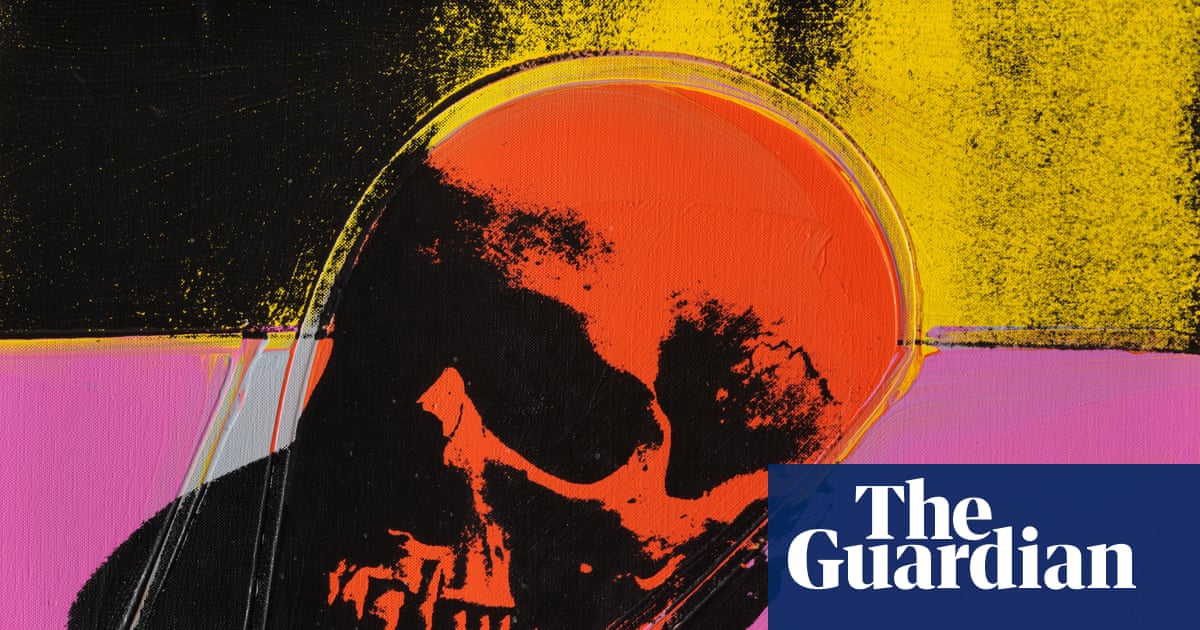
Andy Warhol’s skull leers at Francisco de Zurbarán’s trussed-up little lamb from across the length of the gallery. Separated by hundreds of years – Warhol’s painting from the 1970s, Zurbarán’s from the 1630s – it’s an intergenerational conversation about still life’s staying power, and the inevitability of death.
(暂无翻译) (暂无翻译)
This brilliant little show brings together still life paintings from way back in the past right up to the present day. There’s a gorgeous 1610-19 Dutch flower painting by Osaias Beert the Elder, and a vast vision of meats and cheeses with a pair of animal lungs hung grossly on a hook behind by Giovanni Battista Recco from the 1650s. There are piles of 19th-century French apples, vases of undulating 18th-century flowers. And then that little Zurbarán lamb – one of six he painted – glassy-eyed and morose, so laden with religious symbolism.
(暂无翻译) (暂无翻译) (暂无翻译) (暂无翻译)
When we hit the modern era, there’s a lovely Pierre Bonnard painting of grapes and apples in sickly yellow and orange, a genuinely amazing Nicolas de Staël composition of stark, blocky bottles, lumps of pink rock by Philip Guston that look like cheese. Ignore the crap Picasso and the lumpen Juan Gris, and you get to come face to face with Warhol’s grim, grinning neon orange skull.
(暂无翻译) (暂无翻译)
The whole show reinforces the idea that still life painting is terribly named. Because it’s not about life at all, it’s about death. Every fruit and vegetable in these works is about to rot, every flower is wilting, every animal carcass is about to go fetid. These are paintings of life’s fragility and precariousness. This is about how time is fleeting, how life is temporary. Mortality is written into every brush stroke.
(暂无翻译) (暂无翻译) (暂无翻译) (暂无翻译) (暂无翻译) (暂无翻译)
Is this the greatest still life show ever put on? Does it have a tight curatorial concept? Does it tell an important story about the history and evolution of the genre? No, no and no. It’s just a bunch of really good, historic paintings. See, still life isn’t all just flowers and fruit. And even when it is, it’s pretty good.
(暂无翻译) (暂无翻译) (暂无翻译) (暂无翻译) (暂无翻译) (暂无翻译) (暂无翻译)
Panting, his grey tongue hanging out, blood streaming down his back, the bull is on the verge of death. Paul Pfeiffer’s newest film captures the moment a matador plunges a sword into that bull’s back, but with no fanfare, no drama, no judgment. This is a film about ritual and spectacle, not about animal cruelty or cultural violence.
(暂无翻译) (暂无翻译) (暂无翻译)
This isn’t Pfeiffer at his most attractive or impressive. Instead, this long, awkward, often ugly piece of art cinema zooms in on the faces of the crowd at a corrida, the hands of the saxophone players in the band, the colours of the walls, the patterns on the matadors’ clothing. It’s all the tiny details of this spectacle, the intricacies that make it tick.
(暂无翻译) (暂无翻译) (暂无翻译)
It is, essentially, a film about how humanity creates spectacles to lose ourselves in, and how we repeat actions, sounds and movements to create some kind of meaning. The film is outwardly about bullfighting, but more widely about all rituals, religious or cultural. Is the corrida any different from going to church or a concert or a football match? In the end, we’re all just trying to find meaning by taking part, by belonging, by coming together and cheering as one. Throughout the film, people cheer, drink and eat, the band plays, a bull dies. That’s life, I guess. Joy and sorrow with some snacks in between.
(暂无翻译) (暂无翻译) (暂无翻译) (暂无翻译) (暂无翻译) (暂无翻译) (暂无翻译)
Thomas Dane Gallery, London, until 19 December Ebecho Muslimova has gone through the looking-glass, and what she has found on the other side is more worrying and uncomfortable than any kind of horror fantasy land.
(暂无翻译)
She’s found reality. In every painting and installation here, Muslimova’s cartoon alter ego Fatebe is navigating a world turned upside down, spun on its head and inverted.
(暂无翻译) (暂无翻译)
Fatebe is a lewd, rude, nude comic book character, her naked body able to twist and contort, her face always plastered with a grin and her orifices always on display. One painting finds multiple Fatebes bent over, gleefully scrubbing parquet floors (a nod to a Gustave Caillebotte painting, this show is drowning in art history references) while another Fatebe makes a paper chain out of fabric she’s yoinking out of her nethers. Yet another work sees hundreds of Fatebes filing up the stairs of the gallery itself, but the plaster is crumbling and the print is peeling. Fatebe is trapped under a glass like a spider, or she’s turned herself into the legs of a table.
(暂无翻译) (暂无翻译) (暂无翻译) (暂无翻译)
In one drawing she has grown two heads, one peeing into the other’s eye, the other defecating back in return. All this gross-out weirdness and art historical density isn’t about fantasy and escape though.
(暂无翻译) (暂无翻译)
I think it’s about feeling pulled in endless directions, it’s about being stuck between the place you came from and the place you’re in now, it’s about discomfort and alienation. Or it’s about being able to wee in your own eye. Who knows, really. Either way, it works. Back in 2013, a Palestinian fisherman found an ancient Greek statue of Apollo poking out of the sand.
(暂无翻译) (暂无翻译) (暂无翻译) (暂无翻译) (暂无翻译)
Thinking it was gold, they cut off a finger, but it was just beautiful, mottled green bronze. They tried to sell it on eBay, posting pictures of the sculpture laid carefully on Smurf bedsheets, but the authorities stepped in and confiscated the sculpture. No one knows where it is now, but Rosalind Nashashibi has painted it here, preserving its strange, almost magical history in hazy visions of green limbs on cartoon-covered sheets. Not all the works are good, and the images of nudes and landscapes feel either like a distraction or filler.
(暂无翻译) (暂无翻译) (暂无翻译) (暂无翻译)
But the Apollo images are great. They’re like paintings of an autopsy, stark and unsettling. They’re filled with narratives – a clash of ancient art and modern cartoon, a beleaguered people finding hope of salvation in a gift from the gods, an act of care as those people gently try to preserve this sculpture on their softest bedsheets. Hope and despair, history and the present, all colliding in some often beautiful, washed-out painting.
(暂无翻译) (暂无翻译) (暂无翻译) (暂无翻译)
仅供学习使用,如有侵权请联系删除 · 查看原文