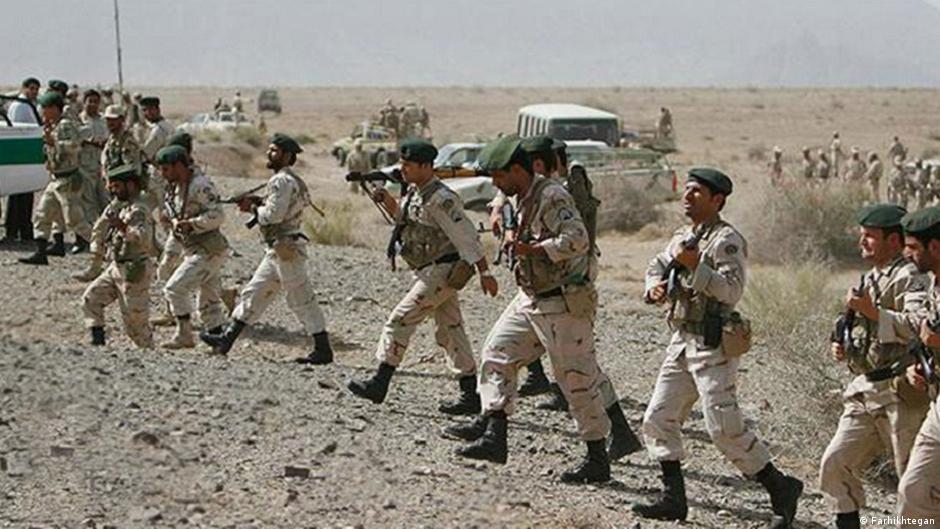
Iran's Balochistan border region sees growing unrest
0 / 41
English
中文
Violence is on the rise in Iran's border region with Afghanistan and Pakistan. The Iran war could shift the strategic balance for militant groups operating in the area.
(暂无翻译) (暂无翻译)
Recent weeks have seen renewed attacks, assassinations and armed clashes in the southeastern province bordering Pakistan and Afghanistan. The incidents occurred in the provincial capital of Zahedan, as well as smaller border towns.
(暂无翻译) (暂无翻译)
The border region of Iran, Pakistan and Afghanistan is home to the Baloch ethnic minority. The region on either side of the Iran-Pakistan border is among the most economically disadvantaged of the wider area.
(暂无翻译) (暂无翻译)
The Pakistani province of Balochistan is economically underdeveloped, despite having large reserves of natural gas, gold and copper.
(暂无翻译)
The situation is similarly dire in the Iranian province of Sistan and Baluchistan, which is predominantly inhabited by Sunni Baluchis. It is one of the poorest regions in the country and marked by underdeveloped infrastructure, limited educational opportunities and water supply shortages.
(暂无翻译) (暂无翻译)
Significantly less information is available about the situation of the Baloch in Afghanistan.
(暂无翻译)
Various Baloch groups are active in Iran and Pakistan, some of whom seek Balochistan independence. Yet to date, there is no evidence of coordinated cross-border cooperation among these organizations.
(暂无翻译) (暂无翻译)
In December 2025, several Baloch opposition groups in Iran united under the umbrella of the Popular Fighters Front. Observers see this as an attempt to more closely integrate their political and military activities.
(暂无翻译) (暂无翻译)
This coalition, which formed before the outbreak of the Iran war, could try to exploit security gaps created by the current situation, Iranian journalist Mehdi Nakhl Ahmadi told DW.
(暂无翻译)
Ahmadi, who lives in Italy, has been covering the situation of the Baloch people for years. He said the new security situation could allow armed groups to expand their operations.
(暂无翻译) (暂无翻译)
Ahmadi said there are structural reasons for Baloch dissatisfaction. "The Islamic Republic's security policy toward ethnic and religious regions has widened the gap in economic development between these regions and other parts of the country in recent decades," he said.
(暂无翻译) (暂无翻译)
He added that the rising number of attacks points to a shift in dynamics, as do increased coordination and changes in the way recent operations have been carried out.
(暂无翻译)
Among the victims of recent clashes were members of Iran's Revolutionary Guards, the Basij militia, armed individuals, and a Sunni cleric.
(暂无翻译)
A source within Iran, who is familiar with the situation of the Baloch people, yet whose identity we cannot disclose security for reasons, attributed some of the armed violence to political, economic and religious discontent.
(暂无翻译)
Discrimination in employment, education, regional development and religious matters contribute to the tension, the source said.
(暂无翻译)
To view this video please enable JavaScript, and consider upgrading to a web browser that supports HTML5 video That's why the armed conflict should not be viewed in isolation, the Iranian source explained.
(暂无翻译)
Clergy, academics and other social leaders had been trying for years to peacefully voice their demands for better social policies and greater investment in the region, the source said. The fact that these efforts were largely unsuccessful had led to a growing willingness among some to resort to more radical measures.
(暂无翻译) (暂无翻译)
"The high number of executions in recent decades is another factor that fuels discontent," said the source.
(暂无翻译)
Most documented executions in the province, meanwhile, are related to drug offenses. Although Baluchis make only up an estimated 2–6% of the Iranian population, they are significantly overrepresented among those put to death.
(暂无翻译) (暂无翻译)
Iran Human Rights reports that Baluchis accounted for 9% of all recorded executions in 2025. In previous years, that figure was 11% (2024) and 20% (2023), respectively. For many people who live in this economically disadvantaged region, smuggling opium into Iran, and fuel out of the country, are one of the few ways to earn a living.
(暂无翻译) (暂无翻译) (暂无翻译)
This, in turn, has contributed to a continued military and security presence at the border. It is not, meanwhile, known whether armed groups in southeastern Iran are being supported from abroad.
(暂无翻译) (暂无翻译)
Violence has also escalated in the Pakistani province of Balochistan.
(暂无翻译)
According to the Pakistan Institute for Conflict and Security Studies, 131 armed attacks were recorded there in September, up from 89 in August. In addition to the separatist movement, which has been active for years, the Pakistani Taliban (TTP) are also expanding their operations.
(暂无翻译) (暂无翻译)
This had led to strategically important transportation links between Iran and Pakistan coming under growing pressure. Still, it cannot be said with certainty whether the recent uptick in violence in Iran's Sistan and Baluchistan province stems from security gaps resulting from the Iran war.
(暂无翻译) (暂无翻译)
The growing number of attacks does, however, suggests that the security situation in the already fragile border region continues to deteriorate.
(暂无翻译)
This article was originally written in German.
(暂无翻译)
仅供学习使用,如有侵权请联系删除 · 查看原文