Hypersonic missiles highlight arms race on Korean Peninsula
0 / 27
English
中文
Both South and North Korea have tested weapons feared by military planners for their speed and ability to maneuver in flight.
(暂无翻译)
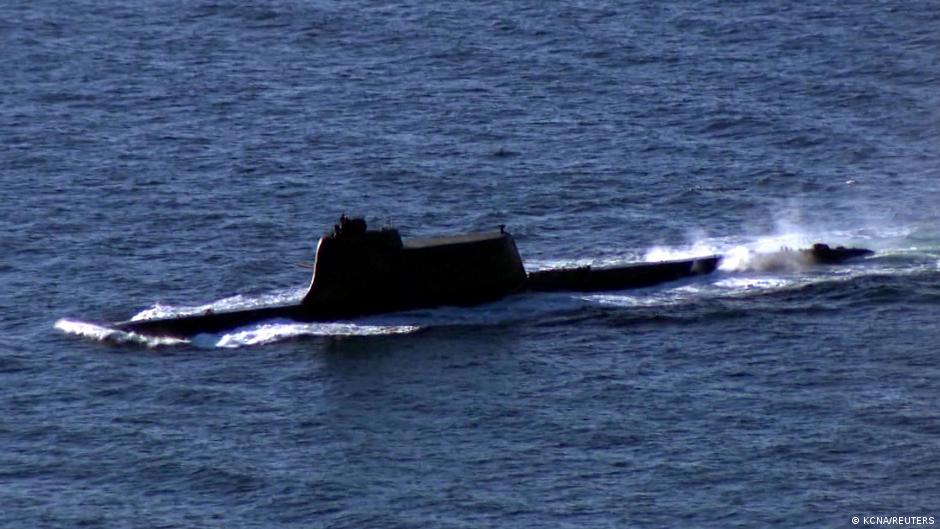
North Korea announced that it had tested two types of submarine-launched cruise missiles off its east coast on Wednesday — a day after the state-run Korean Central News Agency reported that leader Kim Jong Un had visited a new defense industry museum, where he admired an intercontinental ballistic missile reportedly capable of hitting targets in the continental United States.
(暂无翻译)
The visit came five days after South Korean President Lee Jae-myung observed the test launch of his country's first domestically developed hypersonic missile.
(暂无翻译)
South Korea's breakthrough came after Pyongyang announced a test on October 3 of what it described as a hypersonic intermediate-range missile that traveled 350 kilometers (220 miles) before striking its target.
(暂无翻译)
"Comrade Kim Jong Un expressed the expectation and belief that all the nation's missile forces would remain faithful to their missions of defending the sovereignty and security of the republic in a responsible combat posture," the KCNA reported.
(暂无翻译)
Both North Korea and South Korea are primarily racing to develop hypersonic technology because it offers a step-up in offensive capabilities at a time of worsening tensions in the Indo-Pacific region.
(暂无翻译)
Hypersonic missiles are weapons that can travel at velocities of at least five times the speed of sound (Mach 5) or over 6,100 kilometers per hour.
(暂无翻译)
Their speed makes it far harder for defenders to identify, track and destroy inbound missiles, which can carry conventional or nuclear warheads. Their additional advantage over previous generations of missiles is their ability to suddenly change course, dip or weave in flight, making interception significantly more difficult.
(暂无翻译) (暂无翻译)
"There has been an arms race on the Korean Peninsula for many years — and hypersonic weapons are just the latest manifestation of that," Chris Green, the senior Korean Peninsula adviser for the International Crisis Group, told DW.
(暂无翻译)
Hypersonic weapons have become a "priority for the South" as the North has ramped up its capabilities and forged military and economic ties with Russia, Green said.
(暂无翻译)
"And North Korea has nuclear weapons, but it would not be viable to use them," Green said, "as the threat has always been that doing so would mean that the US would turn the country to glass."
(暂无翻译)
"For the North, it is unsurprising that the geopolitics of the region have encouraged them to pursue advanced conventional weapons as they try to have dominance on the peninsula," Green said.
(暂无翻译)
To view this video please enable JavaScript, and consider upgrading to a web browser that supports HTML5 video Though it is impossible to confirm with any certainty that the weapons North Korea says it has developed have the capabilities the government claims, Green said, it would be a mistake to underestimate Pyongyang.
(暂无翻译)
"We do not know their capabilities, and it is possible this is all propaganda, but there is a long list of times the North's capabilities have been underestimated only to be shown that they can, in fact, do what they say," Green said.
(暂无翻译)
Chun In-bum, a retired South Korean army general who is now a senior fellow with the National Institute for Deterrence Studies, shares that assessment.
(暂无翻译)
"It's anybody's guess whether they're telling the truth on this, but any prudent military planner should always assume the worst," Chun said.
(暂无翻译)
North Korea's mastery of the advanced technology required to operate hypersonic missiles appears to have been sudden, although it remains unclear how it acquired the capability.
(暂无翻译)
"They probably obtained the technology through illegal means," Chun said.
(暂无翻译)
"They snoop around firms in the US, South Korea and Japan for this sort of information, but they also do it to their 'friends.'" Wherever the data came from, the fact that North Korea's hypersonic missiles appear to have performed as required should be cause for deep concern. "A greater offensive capability increases the overall danger posed by the North, and if they have weapons that are harder to shoot down, then it is possible there are greater temptations to use them," Chun said.
(暂无翻译) (暂无翻译)
"I'm speculating, of course," Chun said, "but I'm sure that we are looking at ways to neutralize this particular threat — but, as I understand it, there is no good answer right now."
(暂无翻译)
To view this video please enable JavaScript, and consider upgrading to a web browser that supports HTML5 video Green said the viable systems developed by both sides could cancel each other out as a potent battlefield advantage.
(暂无翻译)
"I do not think this changes the balance of power," Green said.
(暂无翻译)
"The North still has its nuclear deterrent and this 'porcupine strategy' of being sharp and prickly in order to keep everyone else at arm's length," he added.
(暂无翻译)
"And it's not a game changer south of the Demilitarized Zone either."
(暂无翻译)
"It is clear, however, that if the North continues to develop its offensive systems and is able to deploy them in huge numbers," Green said, "then there will have to be a conversation about greater missile defense — not only in the South, but also in Japan, and that will then raise some very difficult questions."
(暂无翻译)
仅供学习使用,如有侵权请联系删除 · 查看原文