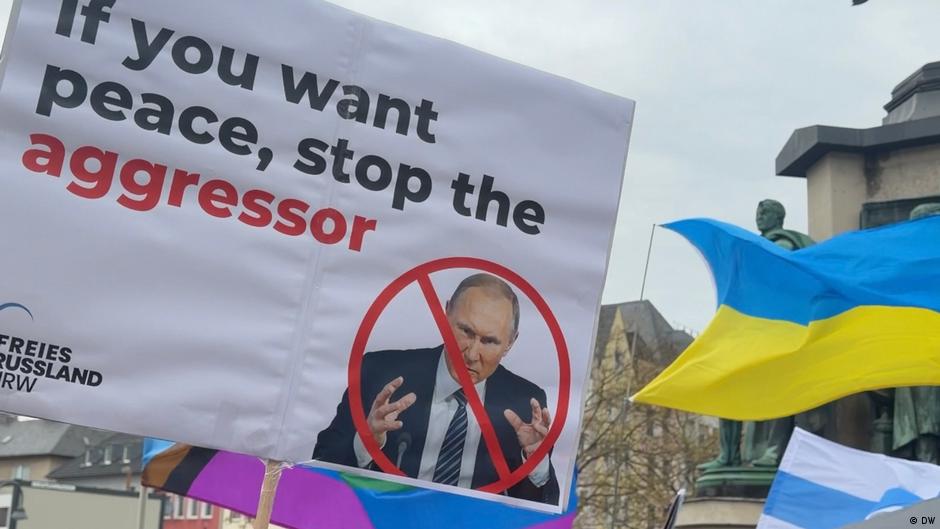
How big is Russia's threat against Germany?
0 / 55
English
中文
Experts believe that, so far, Germany has been ill-prepared — both militarily and mentally — for Russian provocations. They also warn against the idea that ending support for Ukraine would make Germany safer.
(暂无翻译) (暂无翻译)
Warnings keep mounting about Russia's threat to Germany. On October 12, Sinan Selen, president of Germany's domestic intelligence agency, the BfV, said that Russia's covert attacks and destabilization efforts against Germany and other European countries are "not a temporary development but a long-term hybrid attack."
(暂无翻译) (暂无翻译)
Even if the war in Ukraine were to end, said Selen, the Russian threat would not disappear. "For Russia, this is about completely redrawing the map of Europe and redefining its own role within Europe and in global politics."
(暂无翻译) (暂无翻译)
He added that Russia's aggression would continue to be felt not only in Ukraine, but also in the Baltic states, in Poland and in Germany.
(暂无翻译)
German Interior Minister Alexander Dobrindt has described the threat situation as one in which "our country is not at war, but we are the daily target of hybrid warfare." Russia's goal, he said, is not to defeat Germany militarily "but to subdue us politically and socially."
(暂无翻译) (暂无翻译)
Security experts, however, are not so sure that Russia is only interested in exercising political and social influence. Last year, political scientist Carlo Masala told the political talk show Maischberger that "Russia is preparing for a major war." And he didn't mean just a cyberwar. Inspector General Carsten Breuer, the Bundeswehr's highest-ranking officer, agreed.
(暂无翻译) (暂无翻译) (暂无翻译) (暂无翻译)
For now, though, Russia remains tied up in its war against Ukraine. According to NATO Secretary General Mark Rutte, there is no immediate military threat to NATO territory. But according to military experts, European intelligence agencies, and the German Defense Ministry, Russia will have the personnel and equipment to wage a conventional war against NATO by 2029. The Russian defense industry is running at full speed, and Moscow plans to expand its armed forces to 1.5 million soldiers.
(暂无翻译) (暂无翻译) (暂无翻译) (暂无翻译)
At the moment, Russia has other objectives, believes Stefan Meister, an expert on Eastern Europe at the German Council on Foreign Relations (DGAP): "I don't think Russia has any interest in a direct military conflict with NATO right now. It wants to test NATO and also display its capabilities," he tells DW.
(暂无翻译) (暂无翻译)
To view this video please enable JavaScript, and consider upgrading to a web browser that supports HTML5 video An example of Russia's hybrid war might be the failed attack with an explosive-laden drone against a Ukrainian transport aircraft at Leipzig-Halle Airport in August.
(暂无翻译)
Soon after, the German government stated that it was certain Russia was behind the attack. Security expert Nico Lange told DW at the time that Germany was very lucky the explosives did not detonate: "Honestly, it was pure coincidence and not the result of German defensive measures."
(暂无翻译) (暂无翻译)
As for why Germany was targeted specifically, Lange said: "I believe that Germany has always been a primary target of Russian influence and hybrid warfare.
(暂无翻译)
Russia believes that Germany is the key to European decision-making. Germany is now leading the way in supporting Ukraine." Moscow swiftly responded to the German government's accusation with an angry denial.
(暂无翻译) (暂无翻译) (暂无翻译)
Foreign Minister Sergey Lavrov said it was "the beginning of a real war," though there was no immediate further escalation. Nevertheless, there is always the risk that things could spiral out of control following a Russian provocation and subsequent response, according to Stefan Meister: "Accidentally shooting down an aircraft that they were trying to intimidate would trigger a counter-reaction.
(暂无翻译) (暂无翻译)
But I don't believe that Russia is currently aiming for a direct war but rather for provocations, polarization, and sowing uncertainty among the population." Not everyone shares the assessment that Russia poses a threat to Germany — some believe that the threat can be averted.
(暂无翻译) (暂无翻译)
Despite the war in Ukraine, politicians from the far-right Alternative for Germany (AfD) and the populist left-wing Alliance for Social Justice and Economic Reason (BSW) want to improve relations with Russia, resume Russian energy supplies and end support for Ukraine.
(暂无翻译)
AfD co-leader Tino Chrupalla said in early September, "People are fed up with this escalation against Russia, with the billions being squandered there on a system that is actually funded by German taxpayers' money."
(暂无翻译)
The message appears to have resonated among the population, especially in eastern Germany.
(暂无翻译)
The AfD saw strong gains in all three state elections in September. In Saxony-Anhalt, it became the strongest party by far and may even run the government there soon, which would be the first time that a far-right party has held power in Germany since the end of WWII. The CDU's security policy expert Roderich Kiesewetter disputed the claim made by the AfD and BSW that ending aid to Ukraine would mean greater security and more money for German schools and infrastructure: "Spending on education, social policy, and infrastructure is only possible if we live in freedom and democracy — and, above all, in peace and security.
(暂无翻译) (暂无翻译) (暂无翻译)
Anyone who believes that we'll have more money for social programs if we stop supporting Ukraine and let Russia have its way is either gravely mistaken or is making themselves a tool of Russian propaganda." The perceived security threat has led the German military, the Bundeswehr, to fast-track significant modernization through substantial investment.
(暂无翻译) (暂无翻译)
But it is struggling to find enough recruits for its planned expansion. Many young Germans have taken to the streets to protest against plans to reintroduce conscription. Defense Minister Boris Pistorius faced criticism from inside his own party, the center-left Social Democratic Party (SPD), for saying that Germany must become "capable of waging war." Many found the statement to be too militaristic. Is Germany prepared for a military threat?
(暂无翻译) (暂无翻译) (暂无翻译) (暂无翻译) (暂无翻译)
"Not at all. Germany is not well prepared militarily or in the civilian sector, and the population isn't mentally prepared for it either," said Meister. "Just look at the demonstrations against conscription and the military that continue to take place, even though Germany needs a draft. For decades, we've grown up in this culture of pacifism, in a comfort zone. I believe there is very limited societal resilience, but above all, we are not at all mentally prepared for war." Chancellor Friedrich Merz and his conservative Christian Democratic Union (CDU) are under increasing political pressure — especially from the far right — to scale back support for Ukraine.
(暂无翻译) (暂无翻译) (暂无翻译) (暂无翻译) (暂无翻译) (暂无翻译)
But Merz never tires of emphasizing that Ukraine will continue to receive support under his chancellorship, calling it a matter of Germany's security. He recently visited Kyiv once again and, together with Ukrainian President Volodymyr Zelenskyy, surveyed the destruction caused by Russia. But this also means that the threat from Russia will continue and even intensify, says Stefan Meister: "I believe we will see a massive increase in attacks such as the one in Leipzig, of provocations involving drones.
(暂无翻译) (暂无翻译) (暂无翻译)
We will see attacks on infrastructures and possibly also on specific individuals within the military-industrial complex. I believe this is the real, concrete danger facing Germany in the coming months." This article was translated from German.
(暂无翻译) (暂无翻译) (暂无翻译)
仅供学习使用,如有侵权请联系删除 · 查看原文