How Aldi is pushing down grocery prices
0 / 67
English
中文
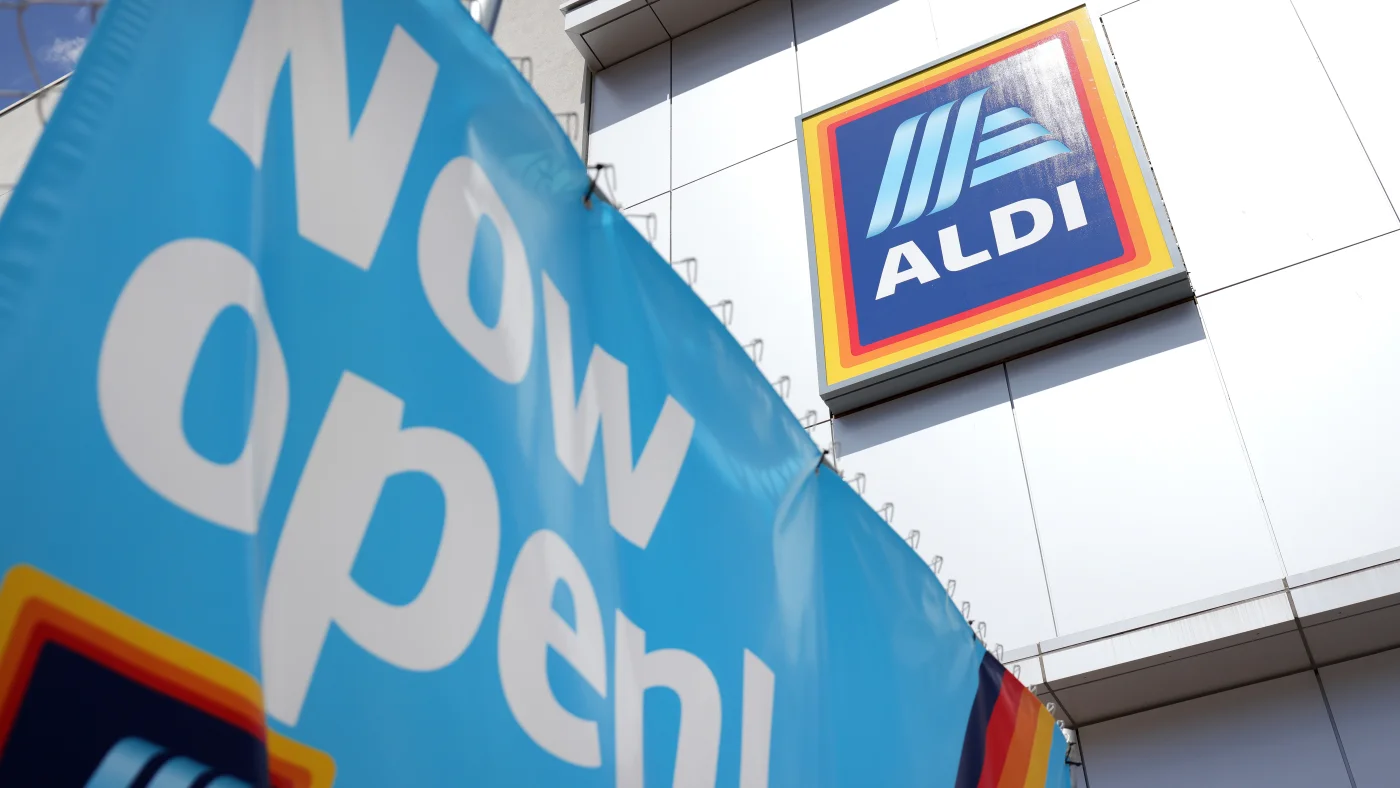
The discount grocery chain Aldi plans to have more than 3,000 American locations by the end of 2028. Kevin Dietsch/Getty Images North America hide caption In the summer of 2020, I lived briefly in Ithaca, New York.
(暂无翻译) (暂无翻译)
It's the only time I've lived near Aldi, the grocery store known for low prices. I went twice, and I thought it was fine, but underwhelming. I appreciated the low prices, but it didn't have everything I needed. The store was small and a bit shabby. I didn't know it yet, but those are the exact ingredients that have made Aldi the fastest-growing grocery chain in America.
(暂无翻译) (暂无翻译) (暂无翻译) (暂无翻译) (暂无翻译)
Per Bloomberg, Aldi plans to have more than 3,000 American locations by the end of 2028, which would be more than any other chain but Walmart. In 2024, Aldi generated some $29 billion in U.S. sales, which is more than Trader Joe's. Aldi is a German company known for having low, low prices, and it deserves that reputation.
(暂无翻译) (暂无翻译) (暂无翻译)
Food reporter Deena Shanker told me that her experience comparison shopping over many months was that Aldi either matched Walmart on price or was a bit cheaper. Grocers like Wegmans and Kroger have announced defensive price reductions, and an analysis published in late 2023 of Lidl, another German grocer with a very similar model to Aldi's but fewer U.S. stores, found that grocery chains reduced their markups ~7 percent in areas where Lidl stores opened. All to say: Aldi is disrupting the grocery business and actually lowering prices even as the cost of food—at restaurants and other grocery stores—goes up and up.
(暂无翻译) (暂无翻译) (暂无翻译)
Maybe this sounds a bit humdrum.
(暂无翻译)
But I found it totally intriguing and perplexing, because… One necessary but not sufficient explanation for Aldi's low prices is that management is obsessed with efficiency and cutting unnecessary costs. There's no music in stores, because speakers (and licensing fees for muzak) cost money.
(暂无翻译) (暂无翻译)
The staff places products on shelves still in the cardboard boxes they were trucked in on, because artfully unpacking fruits, bread, and jerky sticks would mean higher labor costs. The shabbiness is intentional — it's the cost of cheaper groceries. But other grocery chains are similarly obsessed with efficiency. Here's one of my favorite examples about Costco, courtesy of Zachary Crockett and The Hustle: "In another instance, reengineering a container of cashews from a circle to a square shape allowed Costco to stack more items in a single truck, reducing the number of shipments by 24,000 pallets per year.
(暂无翻译) (暂无翻译) (暂无翻译) (暂无翻译)
For shoppers, this meant cheaper nuts." Instead, Aldi's disruptively low prices rely on two primary tactics: Aldi's low prices made their stores very attractive during periods like the Great Recession and today's inflationary era. The Great Recession, especially, enabled their current growth.
(暂无翻译) (暂无翻译) (暂无翻译)
But if all Aldi offered was bargain prices in shabby stores, customers might flee to Costco, Kroger, or Whole Foods when the economy recovered.
(暂无翻译)
So another key to Aldi's success is that it's fun. Aldi has a famously chaotic-good middle aisle with rotating buys like fun toys, German spätzle, and advent calendars that contain 24 festive cheeses. And its U.S. stores have expanded their offerings (a bit) to attract higher-income customers: Aldi doesn't just have the cheapest apples, but the cheapest honey crisp apples.
(暂无翻译) (暂无翻译) (暂无翻译)
Not just super-duper cheap wine but well-priced "premium" wine. Instead of being a sad place to shop when you're low on cash, Aldi has more flea-market energy: a place anyone might go to hunt for good deals and fun finds. Aldi is beloved; many customers arecult-like in their devotion. In some cases, customers line up for new store openings like early iPhone releases.
(暂无翻译) (暂无翻译) (暂无翻译) (暂无翻译)
My main takeaway from researching and analyzing Aldi for several weeks (foran episode of Gastronomics!) is that there's always something new under the sun. American grocery stores are a mature market. They seem pretty stable equilibrium-y.
(暂无翻译) (暂无翻译) (暂无翻译)
But they are dynamic and always changing. Aldi didn't need futuristic tech to disrupt the industry; just a strategy developed 80 years ago, then tweaked for the American market. In healthy markets, there's always a way in for new competitors. My other takeaway is greater appreciation for the famous business idiom: "There are only two ways to make money in business: One is to bundle; the other is to unbundle." The clearest example of bundling and unbundling is probably television. Cable companies bundled hundreds of TV channels together and charged one high fee for all of them.
(暂无翻译) (暂无翻译) (暂无翻译) (暂无翻译) (暂无翻译) (暂无翻译)
Then streaming services like Netflix made money by unbundling television — by allowing people to pay for just Netflix.
(暂无翻译)
Which felt liberating! For a few years. But now customers are annoyed about subscribing to so many streaming services. So streamers are teaming up to form bundles, like getting Disney, Hulu, and HBO Max all for one reduced price. Now, to make money, you gotta bundle. Even the person who coined the phrase about bundling and unbundling didn't think it's literally the only way to make money. Still, I often failed to see (un)bundling as a powerful framework outside of the media industry. Until I realized that Aldi is unbundling the grocery store.
(暂无翻译) (暂无翻译) (暂无翻译) (暂无翻译) (暂无翻译) (暂无翻译) (暂无翻译) (暂无翻译)
For a long time, grocery stores got more bundled. People once went to the baker, the butcher, and the greengrocer. Then the super market put all those things under one roof.
(暂无翻译) (暂无翻译) (暂无翻译)
And then Walmart, Target, and Costco created superstores where you could buy groceries and clothes and big-screen TVs. Now Aldi is reversing this process by unbundling the grocery store. Not only does Aldi not have the big-screen TVs and dupes of Lululemon hoodies and pants, it doesn't even have everything on your grocery list. Aldi unbundled the part of the grocery business it can do super cheaply, and it intentionally locates Aldi stores near competitor grocery stores so shoppers can easily go grab the last few things on their list (the rest of the bundle).
(暂无翻译) (暂无翻译) (暂无翻译) (暂无翻译)
With this in mind, I've started seeing bundling and unbundling at work in more and more industries. If you look closely at your own, I suspect you will, too. My third takeaway is that I just didn't live in Ithaca long enough to grok Aldi.
(暂无翻译) (暂无翻译) (暂无翻译)
If I'd been there longer, I bet I would have made Aldi part of a multi-store strategy. I get it now!
(暂无翻译) (暂无翻译)
Aldi, please come to Colorado (where I live)! At the start of this post, I asked three questions inspired by Aldi's expansion. The first two, which are about how Aldi achieved a comparative advantage, I feel like I've answered. The third was whether the American economy can still deliver a bounty of affordable food.
(暂无翻译) (暂无翻译) (暂无翻译) (暂无翻译)
I think the way Aldi's growth pressured competitors to keep prices low shows that grocers are not the right target of our ire over food prices. But grocery stores are just one slice of the food world.
(暂无翻译) (暂无翻译)
仅供学习使用,如有侵权请联系删除 · 查看原文