Germany's China calculation shifts as import pressures eclipse export benefits
0 / 39
English
中文
Germany has long resisted tougher action against China, fearing retaliation. But rising pressure on key industries has pushed Berlin to seek stronger EU trade-defense powers to protect its industrial base.
(暂无翻译) (暂无翻译)
Germany's cautious approach toward Beijing is cracking. For years, Berlin blocked a harder line on what the European Union describes as China's unfair trade practices.
(暂无翻译) (暂无翻译)
In the last few months, that caution — a fear of Chinese retaliation that could hurt German exporters — has given way to a willingness to escalate.
(暂无翻译)
Last week, Chancellor Friedrich Merz and French President Emmanuel Macron wrote jointly to European Commission President Ursula von der Leyen seeking a new tool to cut a trading partner off from the EU's single market if unfair practices continue.
(暂无翻译)
Clearly aimed at Beijing, the letter warned the measure was necessary against countries that "deliberately seek to undermine ... fair market conditions by political or economic means."
(暂无翻译)
China's Commerce Ministry warned Europe would "suffer the consequences" if it adopted such a "kill-switch" plan, which was timed to coincide with crucial EU-China trade talks in Beijing last week.
(暂无翻译)
To view this video please enable JavaScript, and consider upgrading to a web browser that supports HTML5 video Noah Barkin, a senior adviser with research consultancy Rhodium Group's China practice, told DW that the threats to Germany's export powerhouse "have convinced Merz and his closest advisers that the benefits of action outweigh the costs of inaction."
(暂无翻译)
Before the COVID pandemic, the two economies rose in tandem and German industry benefited from China's ascent.
(暂无翻译)
Since 2021, however, China has fallen from Germany's second-largest export market to its ninth, according to data from Germany Trade & Invest for the first half of 2026.
(暂无翻译)
Chinese competitors have quickly closed the technology gap and benefit from much lower costs and state subsidies.
(暂无翻译)
That pressure is being felt especially in Germany's automaking, precision engineering and chemicals industries. German vehicle makers have suffered a large sales drop in China, which was once their second-largest market.
(暂无翻译) (暂无翻译)
According to data from Rhodium Group, German car exports to China plummeted by 66% between 2022 and 2025. Big German brands now face heavy rivalry from a new wave of Chinese electric vehicle (EV) manufactures in other major markets, including Europe, which is forcing a wave of layoffs and possible factory closures.
(暂无翻译) (暂无翻译)
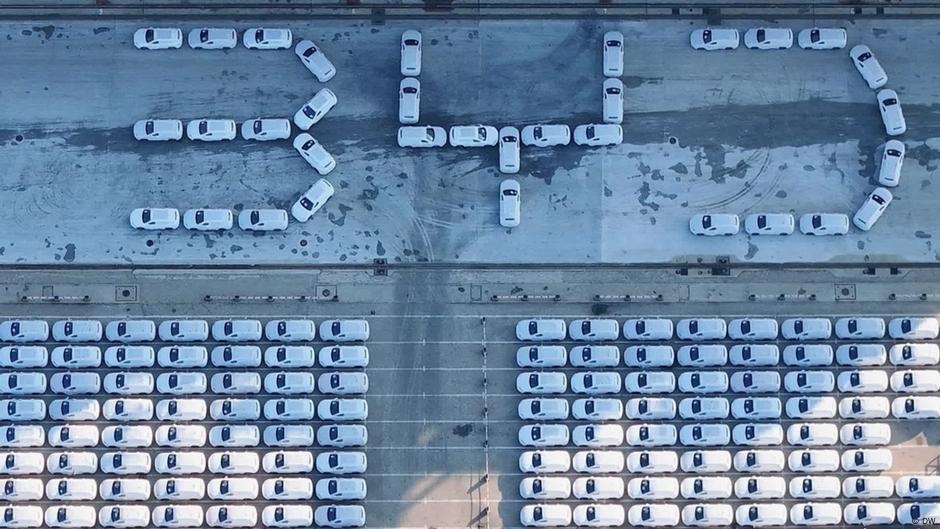
In Germany alone, imports of new Chinese-made cars rose 121% in the first seven months of the year, according to Destatis, the federal statistics agency.
(暂无翻译)
Overall, Chinese-made vehicles accounted for nearly 14% of total vehicle imports. "After continuously losing market share in China ... it [the rivalry] seems to be hitting their business within the European automotive market," Andreas Mischer, an associate fellow at the Berlin-based Mercator Institute for China Studies (MERICS), told DW.
(暂无翻译) (暂无翻译)
Mischer said pressure from Germany's powerful automotive lobby was key to Berlin's "shifting attitude toward trade defense instruments."
(暂无翻译)
Among the many German business leaders who have demanded a more hard-line approach in recent months, Oliver Richtberg, head of foreign trade at VDMA, Germany's mechanical engineering association, was perhaps the most blunt: "We are currently being deindustrialized through unfair measures — and most companies are no longer willing to accept this," Richtberg told Welt am Sonntag newspaper in August.
(暂无翻译)
According to Eurostat, the wider EU's goods deficit with China was around €360 billion ($402 billion) last year — effectively €1 billion per day — and widened again in the first half of 2026.
(暂无翻译)
While Brussels has been pushing back against the dumping of cheap Chinese goods, a separate industrial protection law and other anti-coercion measures are running into trouble from Beijing and at home.
(暂无翻译)
The EU's Industrial Accelerator Act, proposed in March, aims to pull manufacturing investment back to Europe by favoring EU-based firms in public contracts and subsidies.
(暂无翻译)
Foreign investments in key sectors would only be approved if European partners keep majority control, which Beijing has framed as discriminatory.
(暂无翻译)
To view this video please enable JavaScript, and consider upgrading to a web browser that supports HTML5 video The European Automobile Manufacturers' Association (ACEA) warned last month that the draft act does little to counter the threat from cheaper Chinese rivals.
(暂无翻译)
In a position paper, it said the incentive to produce within the bloc has to be large enough to "cancel out the extra cost of producing locally."
(暂无翻译)
Berlin's chief concern was that China could place new export curbs on rare earth minerals and the magnets made from them.
(暂无翻译)
China has a stranglehold on these elements, which are essential for German automotive, renewables and defense manufacturing. Bloomberg last week cited unnamed German officials as saying that a new EU kill-switch could be a "second-strike weapon" if Beijing blocked those exports.
(暂无翻译) (暂无翻译)
Brussels is also considering unilateral limits on how many hybrid cars China can export to the EU, according to the same Bloomberg report. Perhaps to avoid such an open confrontation, the EU and China reached a "shared understanding" last week at the EU-China trade talks in Beijing that could cut Chinese exports of hybrid and plug-in hybrid vehicles to the European Union by more than half, according to EU Trade Commissioner Maros Sefcovic, who headed the European delegation.
(暂无翻译) (暂无翻译)
Reports say the agreement would cap such Chinese imports at 350,000 vehicles annually, with the limit increasing by 6% each year over four years. Overall, new hybrid-electric cars in the EU reached nearly 37% of all new cars registered from January to August, according to ACEA data.
(暂无翻译) (暂无翻译)
MERICS, meanwhile, calculated that the EU is a more critical export market for China than the US.
(暂无翻译)
In the first half of the year, Chinese exports to the EU were $254 billion (€354 billion), versus $172 billion to the US.
(暂无翻译)
This could give EU negotiators a firmer hand as they seek to avoid a trade war while protecting Europe from China's latest export glut.
(暂无翻译)
"The EU has more leverage than it sometimes thinks," MERICS' Mischer told DW. To view this video please enable JavaScript, and consider upgrading to a web browser that supports HTML5 video
(暂无翻译) (暂无翻译)
仅供学习使用,如有侵权请联系删除 · 查看原文