Gen Z protests in Germany: Is France-style violence looming?
0 / 39
English
中文
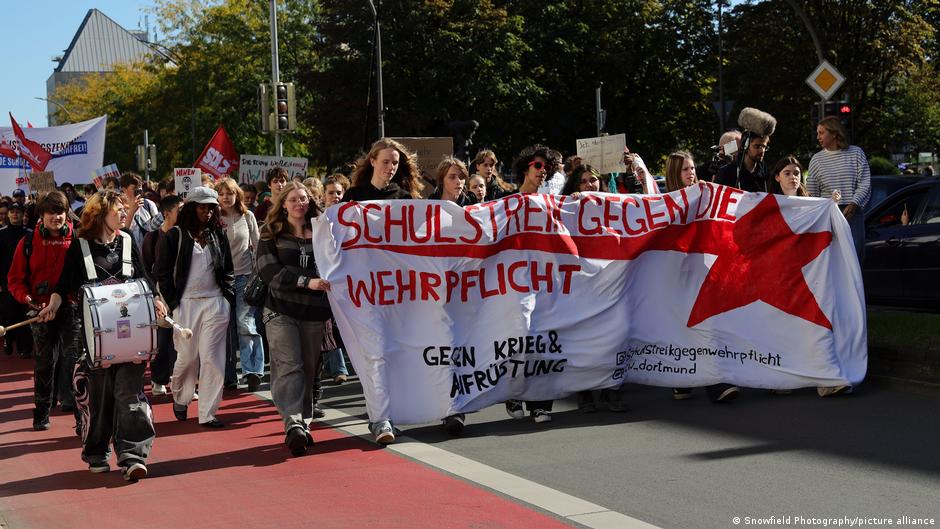
Young people in Germany will take to the streets this weekend to demand education and action on climate change. Politicians warn that the protests could become violent, as in France, but the situations are different.
(暂无翻译) (暂无翻译)
As politicians in Germany look ahead to the coming weekend, many fear that cities across the country could witness the kind of violent unrest that recently shook France. An initiative known as "Gen Z regelt" ("Gen Z sorts it") has launched a social media campaign calling for demonstrations in 23 cities nationwide.
(暂无翻译) (暂无翻译)
"Gen Z" broadly refers to the generation born between 1995 and 2010. Many feel that their parents' generation has done too little to combat climate change and has allowed the gap between rich and poor to widen ever further. At the same time, they are concerned about their educational prospects and future opportunities.
(暂无翻译) (暂无翻译) (暂无翻译)
In France, what began as largely peaceful protests recently spiraled into serious unrest. Cars were set alight in several towns, while in Limoges the town hall was torched. In Lille, Lyon, and Toulouse and elsewhere, police deployed tear gas, leading to numerous arrests.
(暂无翻译) (暂无翻译) (暂无翻译)
Many politicians, particularly within Chancellor Friedrich Merz's center-right Christian Democratic Union (CDU), are warning of similar scenes this coming weekend.
(暂无翻译)
Alexander Throm, the CDU parliamentary group's domestic spokesperson, told the daily Handelsblatt newspaper: "Scenes like those in France must be prevented at all costs."
(暂无翻译)
To view this video please enable JavaScript, and consider upgrading to a web browser that supports HTML5 video In Throm's view, far-left groups and criminals from immigrant communities could "hijack" the demonstrations.
(暂无翻译)
"An ominous alliance is emerging, particularly in Berlin," he warned. Marc Henrichmann, also of the CDU, chair of the Bundestag's parliamentary oversight panel for the intelligence services, also expressed concern: "The far-left extremist scene is internationally connected and coordinated."
(暂无翻译) (暂无翻译)
He said that violent far-left activists now even cross national borders to engage in looting and acts of violence elsewhere. But Sebastian Koos, sociologist at the University of Konstanz whose research focuses on youth and protest movements, told DW that he does not expect Germany to experience unrest on a scale comparable to that seen in France, even though events in the neighboring country helped spark the protests now being planned across Germany.
(暂无翻译) (暂无翻译)
Koos sees key differences between young people in the two countries.
(暂无翻译)
"Unlike in France, these protests are not driven by the same level of anger," he said. "They have been planned, officially registered and carefully organized. The website, in particular, places strong emphasis on peaceful protest and repeatedly stresses a non-violent approach." At the same time, the sociologist does not rule out the possibility that extremist groups could exploit the authorized demonstrations to stir up unrest: "It is certainly very important for the police and public authorities to be well prepared."
(暂无翻译) (暂无翻译) (暂无翻译) (暂无翻译)
Quentin Gärtner, 19, studies biotechnology in Heidelberg and served until November of last year as secretary-general of the Federal Student Conference, which represents around 7.5 million school students in Germany.
(暂无翻译)
"What unites us is that we have run out of patience with the education system.
(暂无翻译)
Many young people are deeply frustrated," he told DW. "The performance of German school students continues to decline, teaching positions are constantly being cut, and in many cases school buildings have seen little or no meaningful investment for years." For Gärtner, the discontent reflects a broader problem with parliamentary democracy in Germany and many other Western countries.
(暂无翻译) (暂无翻译) (暂无翻译)
"Politicians want to win elections.
(暂无翻译)
They focus on the groups that matter most to them electorally rather than on the future and the long-term sustainability of their policies," he said. "And in our aging societies, older people and the baby boomer generation are the groups that carry the most political weight."
(暂无翻译) (暂无翻译)
Opposition parties in Germany have also voiced understanding for the concerns of younger people.
(暂无翻译)
Speaking to Germany's public broadcaster ZDF, Green Party co-leader Felix Banaszak said: "The intergenerational contract is no longer working. Older generations have driven the climate into a dead end." He argued that the social welfare system was also reaching its limits and that rents had become unaffordable.
(暂无翻译) (暂无翻译) (暂无翻译)
According to Banaszak, the only thing the state seems to offer young people are the letters sent to 18-year-olds asking them to consider joining the military. Germany is currently desperate to expand the Bundeswehr and is considering reintroducing national service. By Tuesday, around 134,000 people had registered on the "Gen Z regelt" website to take part in the protests planned for the coming Saturday.
(暂无翻译) (暂无翻译) (暂无翻译)
With several days still to go before the demonstrations, that number could rise further. This article was translated from German.
(暂无翻译) (暂无翻译)
仅供学习使用,如有侵权请联系删除 · 查看原文