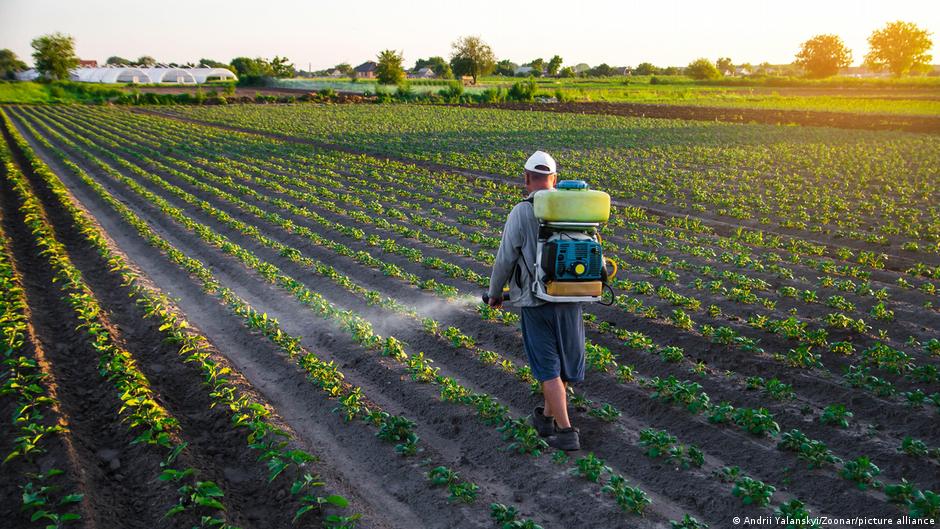
EU moves to loosen rules on pesticide use, as experts sound the alarm
0 / 45
English
中文
The European Union wants to relax rules for pesticides, saying it will be easier for farmers to adopt more environmentally friendly options. But health and environmental experts say the risks are far too great.
(暂无翻译) (暂无翻译)
As part of its drive to "streamline and simplify" EU laws, the European Commission has proposed sweeping changes for agriculture and food safety legislation. These include a move to ease rules controlling the use of pesticides and herbicides, which help fight pests and weeds.
(暂无翻译) (暂无翻译)
Under current EU rules, which date back to 2011, primary pesticide components, or active substances, are only granted approval for limited periods of maximum 15 years.
(暂无翻译)
The European Commission's proposed revamp of the system would make indefinite greenlighting — including of the controversial glyphosate, which has been linked to cancer and kills almost all plant life — the default. Safety reviews would only be done in exceptional cases, and regulatory authorities would bear the responsibility, not the industry.
(暂无翻译) (暂无翻译)
The commission has said its goal is to cut costs, simplify work for authorities and to help farmers stay competitive. Scientists and doctors, however, warn that concerns over human health and environmental impact from these toxic substances are being brushed aside.
(暂无翻译) (暂无翻译)
The European Commission has said it's responding to complaints from farmers and the agriculture industry to clarify EU rules that govern pesticide use.
(暂无翻译)
A joint statement released in May by 19 food associations, including CropLife Europe, which promotes pesticides, said complicated administrative procedures and a lengthy approvals process meant farmers were "left without any effective solutions to protect their crops against insects, weeds and diseases," putting food security and livelihoods at risk.
(暂无翻译)
"The existing system of periodic renewal assessment of every active substance has become unsustainable," the commission's press service told DW, citing "chronic delays" and "bottlenecks" in the approval of new, more sustainable products.
(暂无翻译)
In recent negotiations, EU member states said open-ended authorizations should be restricted to "low-risk active substances." But their stance still proposed extending initial approval periods for other substances to up to 15 years, and a maximum of 25 years for renewals.
(暂无翻译) (暂无翻译)
Herbert Dorfmann, a center-right Italian member of the European Parliament, said there is currently a yearslong delay in approving new pesticides, including more eco-friendly options, meaning farmers are forced to rely on older substances. Or, if these are banned, go without altogether.
(暂无翻译) (暂无翻译)
The commission wants to "make the system more efficient and responsive," while guaranteeing that "the protection of human and animal health and the environment remain the highest priorities."
(暂无翻译)
Dorfmann, who as co-rapporteur is responsible for interinstitutional negotiations on the issue, backs the commission's stance, saying the EU needs "to open up the system for innovation." He aims to bring the parliament's proposal on the new pesticide rules to a vote among EU lawmakers before the end of the year.
(暂无翻译) (暂无翻译)
Ecologists and medical experts, however, have spoken out forcefully against the proposed changes, saying the potential implications for human health and the environment are being downplayed.
(暂无翻译)
In September, more than 500 experts from across the EU signed an open letter calling on the European Parliament to suspend its consideration of the new regulations and conduct an independent investigation into health and environmental impacts.
(暂无翻译)
On October 7, UN rights experts also backed the call for a full review into whether the proposed changes violated the EU's obligations under international human rights law, especially with regard to agricultural workers and children.
(暂无翻译)
Pesticides can persist in the environment, contaminating water and degrading soils. They can also drive biodiversity loss and poison other animals higher up the food chain.
(暂无翻译) (暂无翻译)
When it comes to humans, the European Environment Agency has said it was "not yet possible to estimate the burden of disease linked to current levels of exposure to all pesticides." However, exposure to chemical pesticides, including banned substances that still persist in the environment, has been linked to various cancers, chronic respiratory disease, neurological disorders and developmental delays, as well as problems with fertility and behavior.
(暂无翻译) (暂无翻译)
And exposure is widespread: a survey conducted between 2014 and 2021 found that 84% of urine samples from both children and adults in five European countries contained residue from two or more pesticides.
(暂无翻译)
Martina Vijver, scientific director and ecotoxicology expert at Leiden University in the Netherlands, said experts were "deeply concerned" that the EU's current plan "will weaken rather than strengthen the level of protection for pesticide regulation."
(暂无翻译)
Speaking at the European Parliament in September, she said regular reassessments were key to evaluating the safety of pesticides with new findings, pointing out that the perception of risk changes over time. "The regulatory system must remain capable of correcting yesterday's decisions with tomorrow's knowledge."
(暂无翻译) (暂无翻译)
Salome Roynel, a policy officer at the Pesticide Action Network Europe nongovernmental organization in Brussels, said the harmful effects of pesticides aren't often fully understood until years later, when the product is up for reconsideration.
(暂无翻译)
"New science emerges all the time," she told DW, highlighting how 56 active substances have been banned in the EU since 2011 as a result of periodic reviews. That includes the insecticide chlorpyrifos, used in orchards and on vegetable and cereal crops, which has been tied to harmful effects on children's brain development.
(暂无翻译) (暂无翻译)
To view this video please enable JavaScript, and consider upgrading to a web browser that supports HTML5 video Roynel said it was "obvious that there was some kind of alignment" between the changes proposed by the EU institutions and the demands of the pesticide lobby.
(暂无翻译)
This echoes a new report by nonprofit research and campaign group, Corporate Europe Observatory, which said Dorfmann and other lawmakers had "copy-pasted […] industry demands" into their regulatory proposals. Dorfmann denied the lobby influence, telling DW he had met with "both sides, industry and environmental associations," in public debates on the issue.
(暂无翻译) (暂无翻译)
"The main objective is not to keep old products in the market.
(暂无翻译)
The main objective is to bring new ones to the market," Dorfmann said. Part of that plan, he added, would be to help more environmentally friendly "biocontrol" products and low-risk substances to bypass current administrative hurdles and get on the market faster. It's an idea previously championed by Vijver, who agrees that the current system means more environmentally friendly pesticides are stuck in an administrative "traffic jam."
(暂无翻译) (暂无翻译) (暂无翻译)
She told DW that biocontrol products could go in a green "bus lane" to ease the way to approval at the European Food Safety Authority, while maintaining crucial safety reviews to filter out the more dangerous products. To view this video please enable JavaScript, and consider upgrading to a web browser that supports HTML5 video Roynel also supports the plan to speed up approval for biocontrol substances, but said it needs to be part of a wider system change that includes financial support, monitoring and training to use these new products.
(暂无翻译) (暂无翻译)
And that also includes maintaining the restrictions on more harmful chemical pesticides, not further deregulation.
(暂无翻译)
"If farmers get easier access to synthetic pesticides tomorrow, they would have no incentive to switch to biocontrol," she said. "It's important to put [biocontrol pesticides] on the market and we fully support that, but […] it will not be the silver bullet."
(暂无翻译) (暂无翻译)
仅供学习使用,如有侵权请联系删除 · 查看原文