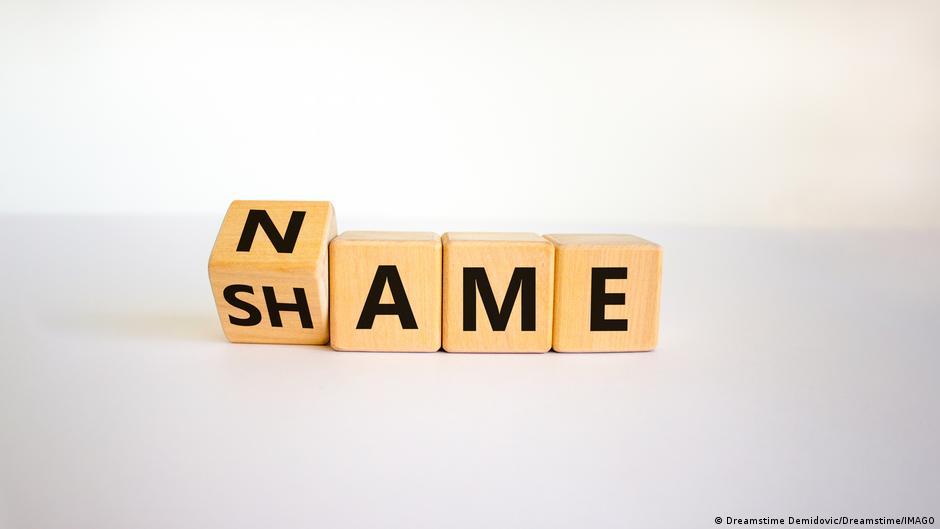
Embarrassing name? How we live with names we don't like
0 / 63
English
中文
Names are central to our identity, so what happens when that name is a source of ridicule? Research points to negative life outcomes, but some people learn to embrace unfortunate names.
(暂无翻译) (暂无翻译)
As a child growing up in Australia, Louise Pain hated her surname.
(暂无翻译)
"People used to tease me; I was called things like 'Pain in the a*s,'" she told DW. "I remember actively hating my surname when I was a child and wanting to change it."
(暂无翻译) (暂无翻译)
The jokes have followed her throughout her life, even after she moved to Germany. But one thing did eventually change: Pain's feelings about her own name.
(暂无翻译) (暂无翻译)
Names are not only a fundamental part of how we identify ourselves — they can, beyond teasing, also influence how other people treat us. So, what happens if we dislike our own name — or if it is perceived negatively by those around us?
(暂无翻译) (暂无翻译)
"A person's name is vital to their sense of identity," psychoanalyst Mikita Brottman told DW. "When someone has an embarrassing name, that embarrassment can be incorporated into their identity."
(暂无翻译) (暂无翻译)
Research on name bias has linked negatively perceived names with romantic rejection,as well as lower educational outcomes, lower self-esteem and more frequent smoking.
(暂无翻译)
This suggests that names could influence our life trajectory, namely through self-esteem and opportunity.
(暂无翻译)
But a person's relationship with their name is not necessarily fixed. Pain's lived experience, and that of another woman with the first name Tiny, shows how people can find ways to reclaim, and even come to value, names that once triggered ridicule and rejection.
(暂无翻译) (暂无翻译)
Names can act as "signals" when you first meet someone, personality psychologist Jochen Gebauer told DW. Those signals may lose importance as people get to know each other, but Gebauer said their effects could also accumulate over a lifetime, potentially contributing to "real measurable advantages and disadvantages."
(暂无翻译) (暂无翻译)
Research led by sociologist Anthony Lee found that a name can evoke inaccurate assumptions about intelligence, competence, trustworthiness, sociability and attractiveness. For Pain, other people's reactions have extended beyond jokes. In high school, a teacher refused to believe that 'Pain' was her real surname and reprimanded her in front of the class.
(暂无翻译) (暂无翻译) (暂无翻译)
"Your name couldn't possibly be Pain. Write your real name!" she recalled the teacher saying.
(暂无翻译) (暂无翻译) (暂无翻译)
To view this video please enable JavaScript, and consider upgrading to a web browser that supports HTML5 video In Lee's UK-based research, less familiar names tended to fall along a dimension partly characterized as "weirdness," which may help explain why difficult-to-pronounce or culturally unfamiliar names receive more negative evaluations.
(暂无翻译)
Tiny, now 54, encountered the same questions about her unfamiliar name growing up in Greece.
(暂无翻译)
Her parents had adapted "Tiny" to "Tinie" to make it sound more Greek, but people would repeatedly ask what her real or baptismal name was.
(暂无翻译)
Even relatives have refused to accept it.
(暂无翻译)
Recently, two elderly aunts introduced her to someone as "Haritini," a conventional Greek name. "I didn't even bother correcting them at this point," Tiny told DW.
(暂无翻译) (暂无翻译)
Tiny's relationship with her name has also evolved.
(暂无翻译)
"The jokes [from others] got repetitive and boring pretty fast, so at least I was left with the sense that I have something unique with my name going on."
(暂无翻译)
Pain, now 41, discovered how much cultural context could change the reaction to her surname when she began learning her father's native French as a teenager.
(暂无翻译)
In French, 'pain' means bread. "People started calling me 'Bread!
(暂无翻译) (暂无翻译)
Louise Bread.'" Later, after moving to Germany, the jokes became mostly bread-related rather than the more scathing ones she had experienced in Australia. "That helped me to feel better about my name," she said.
(暂无翻译) (暂无翻译)
As they got older, both Pain and Tiny developed coping strategies to pre-empt people's reactions to their names. Tiny sometimes introduces herself with: "Hi, I'm Tiny.
(暂无翻译) (暂无翻译)
It's my name and not a statement," or, "I'm Tiny.
(暂无翻译)
Not a difficult name to live up to." "This usually stops people from asking awkward questions." Pain also began to embrace the humor surrounding her name.
(暂无翻译) (暂无翻译) (暂无翻译)
"I was convinced that I should become either a doctor or a dominatrix, or perhaps both, to become either 'Doctor Pain,' or 'Mistress Pain.'" "Names can conjure that whole spectrum of shame and pride," psychoanalyst Melissa Daum told DW.
(暂无翻译)
Pain now finds that people tend to see her surname as "funny and endearing… it's become something that is more of a funny talking point," she said.
(暂无翻译)
But the childhood discomfort has not entirely disappeared.
(暂无翻译)
When Pain thinks about having children, her feelings about the name become more complicated.
(暂无翻译)
"I don't really want to pass on my surname ... so there is a deeper wound there."
(暂无翻译)
But Pain also believes her father would be deeply hurt if future children had a different name. The surname she once hated connects her to him and to her French heritage.
(暂无翻译) (暂无翻译)
"Something that once feels like an inconvenience or a source of self-consciousness can become a marker of distinctiveness, history, or belonging," Daum said.
(暂无翻译)
"My parents seemingly made an unfortunate choice, but by now I have embraced both the name and the sense of uniqueness that comes with it." That does not mean she uses Tiny everywhere.
(暂无翻译) (暂无翻译)
She avoids it on dating apps because "Tiny might give off the wrong message" and does not use it in her email address when she wants to appear professional.
(暂无翻译)
To view this video please enable JavaScript, and consider upgrading to a web browser that supports HTML5 video Pain, meanwhile, uses a Germanized version of the French word for bread as her social media surname.
(暂无翻译)
Online, people have more control over what name they present to others. As Daum put it: "Choosing one's own name can feel like an act of mastery, even a refusal of that original passivity: I will decide what I am called and how I am encountered."
(暂无翻译) (暂无翻译)
But accepting a name does not necessarily mean embracing it in every situation.
(暂无翻译)
Pain once wanted to change her surname.
(暂无翻译)
Tiny considered using her middle name in her thirties. Neither ultimately abandoned the names that had caused them difficulties.
(暂无翻译) (暂无翻译)
For Tiny, at least, a name that once made her feel awkward has become something she can imagine carrying for the rest of her life.
(暂无翻译)
"It might be cute to eventually be a granny called Tiny." Edited by: Richard Connor
(暂无翻译) (暂无翻译)
仅供学习使用,如有侵权请联系删除 · 查看原文