Critics warn of espionage risks as Slovakia restores military-diplomatic representation with Russia
0 / 42
English
中文
Slovakia is restoring military-diplomatic relations with Russia for the first time since 2022. The government has defended the move but critics warn of espionage risks and further damage to trust within NATO.
(暂无翻译) (暂无翻译)
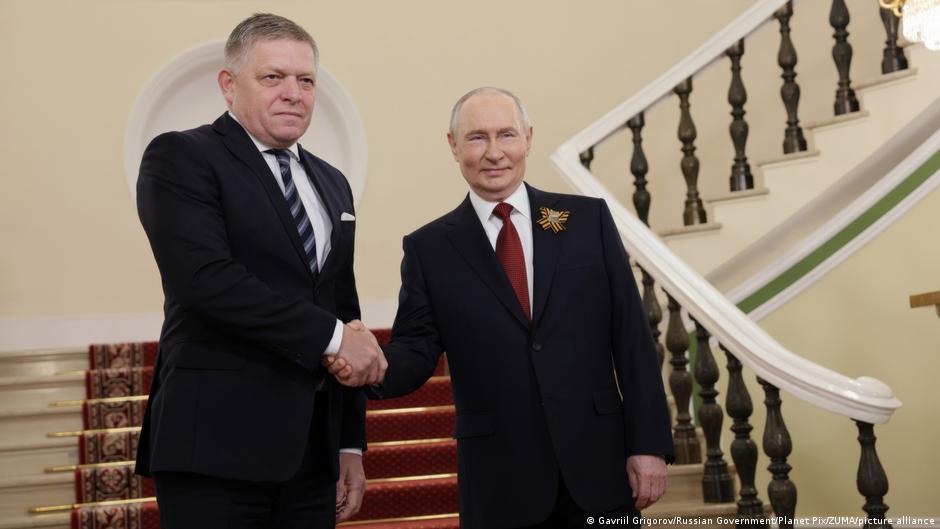
When Robert Fico sat opposite Vladimir Putin in the Kremlin in May, the Slovak prime minister said relations between their countries should extend beyond energy supplies.
(暂无翻译)
He told the Russian president that steps had already been taken to restore military attaches at their respective embassies.
(暂无翻译)
Five months later, the arrangement is now taking shape.
(暂无翻译)
Slovakia has sent two military officers — Brigadier General Slavomir Staviarsky and his deputy, Colonel Ivo Gahir — to Moscow and is preparing to receive a Russian military attache in Bratislava, restoring military-diplomatic representation for the first time since Russia's full-scale invasion of Ukraine in February 2022.
(暂无翻译)
The move has prompted criticism from opposition politicians, who question what Slovakia stands to gain.
(暂无翻译)
They warn that Russia could use the arrangement to strengthen its intelligence operations.
(暂无翻译)
"One additional military attache does not fundamentally change that broader picture; the appointment's main significance is the political signal it sends," Martin Poliacik, a former Slovak MP affiliated with the opposition Progressive Slovakia party, told DW.
(暂无翻译)
"NATO allies should be concerned both about the activities of the incoming officer and about the political environment in which he will operate," he went on.
(暂无翻译)
The appointments were reported by Slovak news website Aktuality.sk on October 8. Both officers appear on the Slovak Defense Ministry's published list of military diplomats serving abroad.
(暂无翻译) (暂无翻译)
According to public broadcaster STVR, Staviarsky has been in Moscow since the beginning of August.
(暂无翻译)
Meanwhile, opposition defense experts quoted by Aktuality.sk named the incoming Russian officer as Maxim Verezan.
(暂无翻译)
Verezan has received Slovak approval, according to the opposition sources cited by the website, but was not yet listed among accredited military attaches.
(暂无翻译)
Aktuality.sk says that the Defense Ministry has not answered its question as to when Verezan is due to arrive in Bratislava.
(暂无翻译)
The prospect has revived memories of a Russian espionage scandal involving Sergei Solomasov, the Russian embassy's deputy military attache in Bratislava, a few years ago.
(暂无翻译)
Solomasov was filmed recruiting and handing over money to Bohus Garbar, a contributor to the pro-Russian website Hlavne spravy, in 2021.
(暂无翻译)
Solomasov was expelled from Slovakia the following year. Garbar was subsequently convicted of espionage and bribery.
(暂无翻译) (暂无翻译)
Opposition experts told Aktuality.sk that a Slovak attache in Moscow would be closely watched and obtain little useful information, while the reciprocal Russian posting could facilitate espionage in Slovakia.
(暂无翻译)
They warned that the incoming officer could conduct influence and disinformation operations, questioning what Slovakia would receive in return.
(暂无翻译)
The Slovak government and its supporters have defended the renewal of contacts as a means of gathering information and maintaining diplomatic representation.
(暂无翻译)
In a statement reported by Slovak public broadcaster STVR, Slovak military intelligence said Staviarsky's role was to assess the security and military-political situation and keep the Defense Ministry informed.
(暂无翻译)
Richard Gluck, a member of Fico's Smer party who chairs parliament's defense and security committee, pointed to the presence of American, British and French military diplomats in Moscow.
(暂无翻译)
"We were losing a great deal of information," Gluck told STVR, arguing that ending Slovakia's military diplomatic presence in Moscow had been a mistake.
(暂无翻译)
For retired Lieutenant General Pavel Macko, however, the circumstances in which the previous contacts ended are crucial.
(暂无翻译)
"This is a very serious step taken by the Fico government," said Macko, a former Slovak deputy chief of defense and once the highest-ranking Slovak general in NATO's command structures.
(暂无翻译)
"Nothing has changed [since 2022], just the opposite," he went on.
(暂无翻译)
"Russia's adversarial activities continue to grow in Slovakia and in the region. The Russian war of aggression against Ukraine continues with high intensity, so do the hostile hybrid activities against Slovakia and its neighbors," Macko said.
(暂无翻译) (暂无翻译)
He pointed to a foiled plot to burn down a Ukrainian-owned drone factory in eastern Slovakia and suspicions that incidents in Munich and Leipzig were linked to Russian operations based in Slovakia.
(暂无翻译)
Macko also warned that political influence over Slovakia's intelligence services and the government's pro-Russian policies could further damage intelligence-sharing and trust among allies, despite the presence of "a significant number of very professional and trustworthy officers."
(暂无翻译)
Martin Poliacik, meanwhile, said he suspected political motives lay behind the decision to restore the military attache posts, which comes as Prime Minister Fico eyes his chances of re-election next year.
(暂无翻译)
"[Fico's] best chance of building a credible narrative for the next election is to claim that everyone else is dragging us into war and he alone wants peace," Poliacik told DW.
(暂无翻译)
"I believe he will argue that he is best placed to talk to Putin about ending the war, and that this requires an exceptionally close relationship with him," he went on, adding that Fico tried to keep quiet about the major role played by Slovak arms manufacturers in supplying Ukraine with ammunition.
(暂无翻译)
The ammunition is supplied under commercial contracts, rather than as military aid from the Slovak government.
(暂无翻译)
Poliacik, too, distinguished between Slovakia's formal commitments and confidence in its political leadership. In his view, Western partners have become accustomed to Fico's behavior.
(暂无翻译) (暂无翻译)
"Slovakia is formally fulfilling its NATO commitments," he went on.
(暂无翻译)
"Formal compliance does not, by itself, settle the question of political trust," Poliacik added. "Predictability, however, is not the same as reliability."
(暂无翻译) (暂无翻译)
仅供学习使用,如有侵权请联系删除 · 查看原文