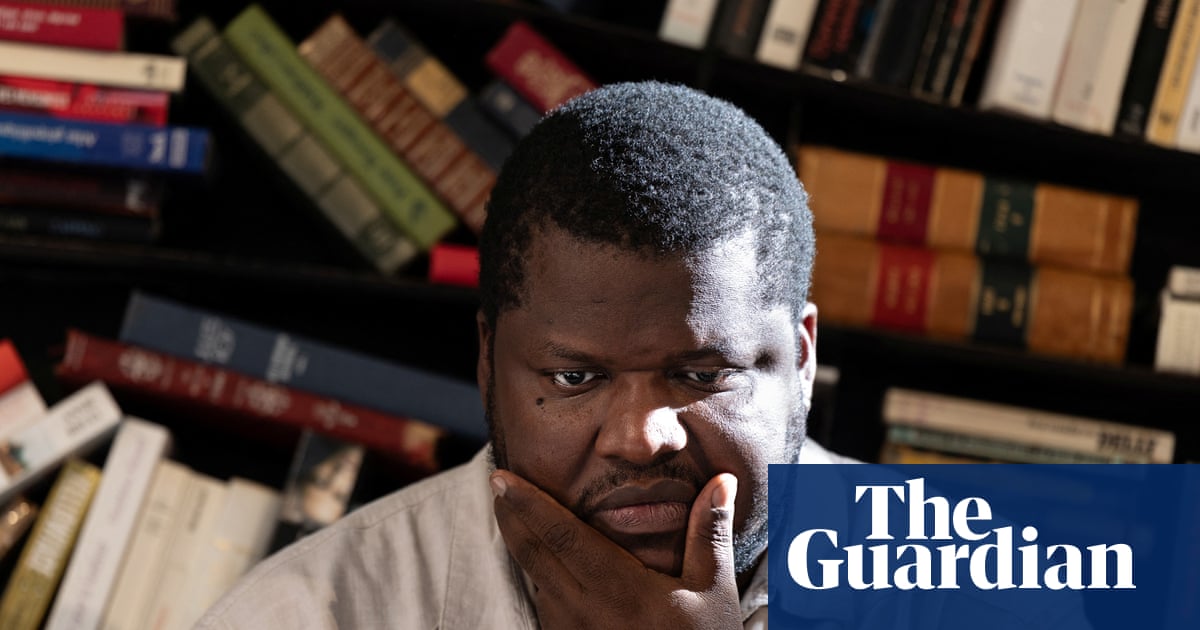
Canadian publisher Boréal ends relationship with novelist Thélyson Orélien over alleged use of AI
0 / 22
English
中文
The publisher of top-selling Haitian Canadian writer Thélyson Orélien, who was removed from France’s most prestigious literary prize list last month, has confirmed the author used artificial intelligence to help write his novel C’était ça ou mourir (It Was Either That or Die).
(暂无翻译)
Orélien has denied allegations that he used AI on his breakthrough novel and, last week, Canadian publisher Les Éditions du Boréal said it was standing by the 38-year-old writer.
(暂无翻译)
But on Wednesday, Boréal said it had conducted a further investigation into the allegations.
(暂无翻译)
“New information, confirmed over the past few days, indicates that artificial intelligence was used in the writing process” of the novel, a statement from Boréal said.
(暂无翻译)
The publisher announced it was “ending its professional relationship” with Orélien.
(暂无翻译)
Boréal said it did not know the extent of AI’s use in the writing process “and we will likely never have a definitive answer”.
(暂无翻译)
It said it gathered all the working versions of the novel and hired an outside party to analyse various drafts.
(暂无翻译)
“The results obtained this week revealed traces of AI tags in the metadata of certain documents,” Boréal said.
(暂无翻译)
Before conducting this analysis, the publisher said it had tried to work with Orélien to gather the evidence necessary to prove his innocence.
(暂无翻译)
That effort was inconclusive, and Orélien “subsequently announced that he would not provide any further information,” the publisher said.
(暂无翻译)
The novel about migration had been scheduled for translation in more than 20 countries.
(暂无翻译)
The book was shrouded in suspicion and withdrawn from the list for France’s book prize the Prix Goncourt, after tests with AI detector Pangram indicated a 100% probability it contained computer-generated text.
(暂无翻译)
In a statement to Agence France-Presse earlier this month, Orélien called the allegations “slander and heresy”.
(暂无翻译)
“Here and there I did use tools for research, particularly for foreign idioms,” he said in a statement sent exclusively to AFP.
(暂无翻译)
“But not a single sentence in this book was created by a machine, nor the meaning or the structure of a story that comes from my gut.” He stood firm on Wednesday, telling the French newspaper Libération he used AI “in the creative process” for “historical research”.
(暂无翻译)
“I’ve explained everything to those close to me, but at the moment I don’t think my words count for anything,” he said, adding that what he is now experiencing has “gone way too far”.
(暂无翻译)
Orélien said he started writing the book in late 2017 “on the corner of a table” and completed a first draft in 2019 of more than 300 pages, several years before the advent of AI services such as ChatGPT.
(暂无翻译)
The author fled his native Haiti after a 2010 earthquake that struck the Caribbean island, already ravaged by poverty and unrest.
(暂无翻译)
In response to separate allegations of plagiarism, Orélien admitted to making “unacceptable mistakes” in the past in his writing, without mentioning specifics.
(暂无翻译)
“I was just over 20, I was probably a little too impatient, without really understanding how much I still had to learn.
(暂无翻译)
I wanted to write, I was reading a lot,” he wrote. “But admiring someone does not give you the right to take, to claim as mine texts that are not my own.”
(暂无翻译) (暂无翻译)
仅供学习使用,如有侵权请联系删除 · 查看原文