‘A key artist in her own right’: wallpaper and fabrics designer emerges from William Morris’s shadow
0 / 29
English
中文
For more than a century, she has been little more than a footnote in William Morris’s story, her work mistaken for his, her contribution to British decorative art largely overlooked.
(暂无翻译)
Yet, in her lifetime, Kate Faulkner was a pioneer: the first person after Morris to design wallpapers and fabrics for Morris & Co, and one of only four designers he ever trusted to do so. Several of the patterns she designed under her name for the company in the 1870s and 1880s are still sold today.
(暂无翻译) (暂无翻译)
Now, an exhibition at the Fitzwilliam Museum in Cambridge is seeking to restore Faulkner to her rightful place in art history.
(暂无翻译)
A Call to Art: William Morris and the pre-Raphaelites is the first exhibition to celebrate Faulkner and her work as a designer, maker and workshop supervisor at Morris & Co.
(暂无翻译)
It will put on public display, for the first time, a monumental 6.3 metre-wide oak and silvered-gesso altarpiece she was commissioned to make for Morris & Co in 1886, alongside her textile designs and wallpaper patterns which helped to make William Morris a household name.
(暂无翻译)
Highlights include her tile depicting Penelope, the heroine of Greek mythology, which is based on a design by Edward Burne-Jones, and some of her painted ceramics, including decorative plates that were sold in the Morris & Co shop.
(暂无翻译)
“Kate Faulkner was not simply working in William Morris’s shadow – she was a key artist in her own right,” said Karen Livingstone, senior curatorial adviser to the exhibition, which opens on 23 October. “Her skill and creative contribution were fundamental to Morris & Co, and this exhibition and its new research reveal just how central her artistic voice was to the commercial success of William Morris.” Her 1879 Mallow wallpaper design is still sold by Morris & Co.
(暂无翻译) (暂无翻译)
Other wallpaper manufacturers bought her designs and she earned an international reputation for her work, but her legacy has been overshadowed by Morris’s since she died in 1898.
(暂无翻译)
Livingstone is appealing for help from the public to trace the descendants of Faulkner’s sister, Lucy Orrinsmith, whose granddaughter, Lesley Janet Hitch (nee Simmons), died in 1995.
(暂无翻译)
She hopes this will uncover a photograph or portrait of Faulkner, as none is known to exist. “I’ve tried really hard to trace her family and to find an image of her, and I have drawn a blank at every turn,” said Livingstone, the author of Women Pioneers of the Arts and Crafts Movement. “I would love to know where her family are so her legacy could be more expanded and revealed.” The overall aim of the exhibition, which runs until 3 May 2027, is to re-examine Morris and his inner circle – including the artists and designers Edward Burne-Jones, Dante Gabriel Rossetti, Elizabeth Siddal and May Morris, the daughter of William and his wife, Jane. One of Morris & Co’s most successful areas of production was embroidery, which was managed by Jane Morris and her sister, Elizabeth Burden, before May took over in 1885.
(暂无翻译) (暂无翻译) (暂无翻译) (暂无翻译)
Faulkner embroidered figurative panels to William Morris’s designs and helped with the design and production of carpets, as well as cutting woodblocks for engravings and painting tiles and designing patterns for textiles and wallpapers.
(暂无翻译)
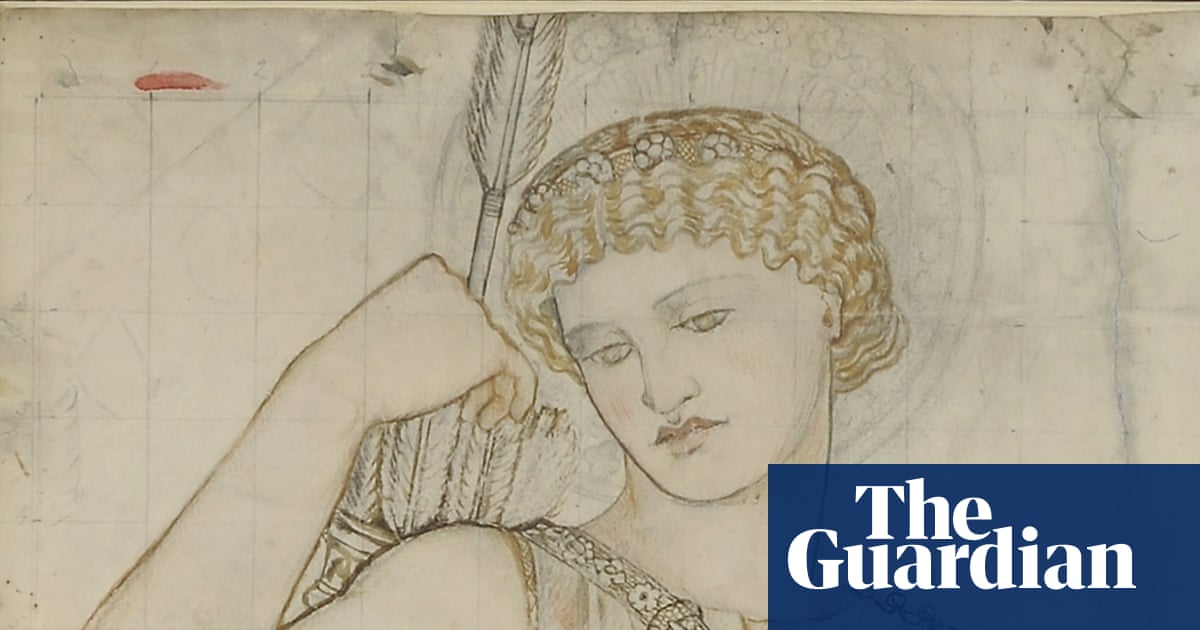
New research by Livingstone has revealed that a design by Morris depicting the Greek goddess Artemis was embroidered by Faulkner for Red House, Morris’s Arts and Crafts villa in Bexleyheath, south-east London, where the idea for Morris & Co was born in 1861.
(暂无翻译)
The Artemis embroidery places Faulkner at Red House at the very moment when Morris and his circle were inspired to create their own interiors company and start making products for sale.
(暂无翻译)
“It’s reinstating her in a story which is usually told about the men in that circle … It was during the process of making these embroideries and furnishing Red House that they decided to set up Morris & Co,” Livingstone said.
(暂无翻译)
Faulkner, who was a socialist like Morris, would visit the house regularly and spend weekends there. “They [the women in Morris’s circle] used to sit around and embroider together,” Livingstone added.
(暂无翻译) (暂无翻译)
She thinks it is highly likely that Faulkner, whose brother Charles was one of Morris’s co-founders, participated in the discussions about Morris & Co that were happening in Red House at that time. “She was there – the women were all there.
(暂无翻译) (暂无翻译)
They can’t possibly not have been part of the conversation.” Faulkner’s role in making the Artemis embroidery – one of a series of 12 panels planned for the Red House dining room – was previously unknown. While the embroidery itself is now lost, a drawing of the embroidery design will be on display within the exhibition, along with three surviving panels embroidered by Burden. By 1862, Faulkner and her sister were producing embroideries for the firm to sell.
(暂无翻译) (暂无翻译) (暂无翻译)
But it would take another 13 years for one of her patterns for Morris & Co, Carnation, to be registered under her name in 1875. “I suspect there’s lots more out there that just hasn’t been found or identified,” Livingstone said.
(暂无翻译) (暂无翻译)
“For sure, there’s work she created that is still being attributed to Morris.”
(暂无翻译)
仅供学习使用,如有侵权请联系删除 · 查看原文